
Close-up on a flask

Why Experience Still Wins in a Data-Driven Industry

Modern chemical manufacturing generates more data than ever. Reactor sensors log temperature, pressure, and addition rates in real time. Process historians capture every batch. Analytics platforms flag deviations before they become failures. These are genuinely useful tools, and no serious manufacturer would want to work without them. But data is only part of the picture. … Continued
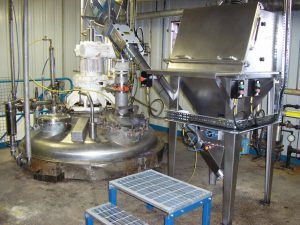
Vacuum Drier and loading facilities

From Supplier to Strategic Partner: Making the Shift

Most supplier relationships in chemical manufacturing begin in the same way. A requirement is identified, a supplier is qualified, and an order is placed. The transaction works and it repeats. Over time, that arrangement becomes familiar but familiarity is not the same as integration. Some manufacturing relationships can develop well beyond order fulfilment. For complex … Continued

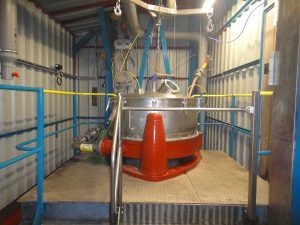
A Stainless Steel Centrifuge used in Chemical Manufacturing

The reality of capacity constraints in the UK market

By the time most buyers go looking for reactor time, the best of it is already committed. UK chemical capacity does not run out overnight. It tightens quietly whenever several pressures build at once and by the point the shortfall becomes obvious the room to manoeuvre has usually gone. The instinct is to treat capacity … Continued

Viewing a flask

Where Hidden Bottlenecks in Chemical Production Really Form

Most throughput problems get blamed on the plant. Equipment is tangible, easy to point at, and easy to schedule maintenance around. In practice, the constraint that limits output is rarely a reactor or a drier. It is a decision that never got made, a handover that was never closed out, or a regulatory check that … Continued

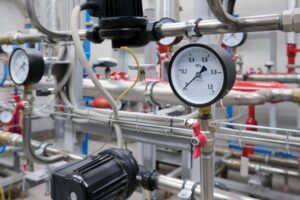
temperature gauge

Speed vs Certainty: Why Faster Isn’t the Same as Scaling Well

Speed gets treated as the prize in chemical manufacturing. Scale quicker, respond sooner, ship earlier, and you’ve won. It’s an easy story to believe and most of the time it’s only half true. The trouble is what speed hides. Push a process to production faster than your understanding of it, and the cost doesn’t disappear. … Continued

ISO Creditation

Quality & Compliance in Toll Manufacturing: What Buyers Need to Know

Outsourcing chemical production requires rigorous oversight and a comprehensive understanding of complex regulatory frameworks. When businesses delegate the synthesis and blending of highly technical formulations to a contract manufacturer, maintaining strict quality control and regulatory adherence is paramount. Toll manufacturing provides highly scalable solutions and immediate access to specialised infrastructure, but these strategic advantages must … Continued

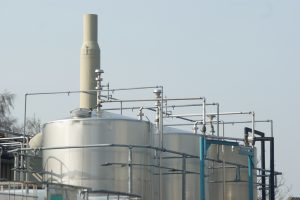
Bulk Storge tanks at Witton Chemical Co. Ltd.

The Industries Benefiting From Toll Manufacturing

Scaling production to meet sudden market demands often presents a complex challenge for chemical and polymer producers. Expanding in-house facilities requires substantial capital expenditure, lengthy lead times, and significant operational risk. Toll manufacturing, also known as contract manufacturing, offers a highly effective strategic pathway to bypass these hurdles. This model allows a business to outsource … Continued

The Role of Polymer Dispersants in Paints and Inks

Acrylic copolymers are fundamental to achieving stable pigment dispersions and controlling viscosity in paints and inks. Their inclusion in formulations prevents pigment agglomeration, improves colour consistency, and contributes to the overall quality of the coating or printed finish. One of the primary benefits of using block or graft copolymer dispersants is their ability to adsorb … Continued

Polymers in Agricultural Suspension Systems

Polymers play a crucial role in maintaining the stability and efficacy of active ingredients. From suspension concentrates to emulsion-based products, copolymers are used to keep solid particles evenly distributed, ensure smooth application, and reduce environmental impact. Solid active ingredients in pesticide and fertiliser formulations often tend to settle or clump over time. As noted in … Continued

Packaging and Adhesives: How Polymers Enhance Adhesion and Coating Uniformity

Polymers, particularly amphiphilic copolymers, are integral to modern adhesive and coating formulations. Their unique structures enable them to stabilise emulsions, enhance compatibility across various systems, and improve overall film quality. Whether aiming for high-performance applications or cost-effective solutions, understanding the role of these polymers is essential for formulators seeking to optimise their products. Stabilising Emulsions … Continued