

The reality of capacity constraints in the UK market
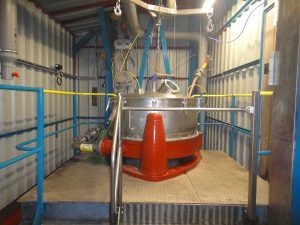
By the time most buyers go looking for reactor time, the best of it is already committed. UK chemical capacity does not run out overnight. It tightens quietly whenever several pressures build at once and by the point the shortfall becomes obvious the room to manoeuvre has usually gone.
The instinct is to treat capacity as a scheduling task that can wait until demand firms up. In practice, the constraint is rarely a shortage of vessels. It is the convergence of raw material lead times, reactor availability, and regulatory timing, all landing together at the moment output needs to climb.
This article looks at:
- What genuinely drives the capacity squeeze in the UK market
- Why late planning, not season, creates most of the risk
- How a flexible toll manufacturing partnership reduces supply exposure
- Why Witton is built to absorb this kind of pressure
Where the UK capacity position actually tightens
Capacity constraints are real, but they are not governed by a fixed calendar. They build whenever demand, lead times, and scheduling pressure start to converge which can happen at year-end, during a product launch or after an unexpected order.
Several things tend to move at once:
- Established producers commit capacity early for larger campaigns, so the queue lengthens quietly.
- Imported monomers and intermediates sit at the mercy of volatile shipping schedules.
- Registration questions that looked settled turn out to need work.
None of this shows up as a single, visible failure. It surfaces later as a delivery date that moves, a batch that slips, or a quarter that comes in short. Buyers who treat capacity as a problem to solve later tend to discover the constraint too late. The businesses that plan ahead are the ones whose customers stay supplied.
What drives the squeeze in the UK market
The pressure is a convergence of supply-side factors rather than a single bottleneck. Four compound most reliably.
- Extended raw material lead times. Imported monomers and intermediates depend on shipping schedules that shift without warning. A lead time that was comfortable one quarter can become the limiting factor the next.
- Reduced reactor availability. When producers commit capacity to larger programmes, the queue lengthens. The buyer who waits finds fewer slots, longer waits, and higher minimum order commitments.
- Regulatory friction under UK REACH. New small-molecule chemistries carry registration cost and delay. Treated as a late-stage gate rather than an early input, that friction converts directly into weeks of hold-up.
- Constrained skilled labour. Plants cannot ramp output instantly after quieter periods. The people who run the process are a genuine limiting factor, not an assumption to be built over.
For buyers, this means longer queues, larger commitments, and far less room to respond when demand moves suddenly.
Why early planning matters more than timing
These pressures exist year-round. What changes is not the season, but the moment they arrive together.
When demand firms up, reactor books fill and raw material lead times stretch at exactly the wrong point. A schedule that looked comfortable must now absorb outstanding work, new commitments, and no remaining buffer. A constraint that would have been simple to resolve in isolation becomes one of several competing priorities.
Committing capacity early protects against three predictable outcomes:
- Last-minute scrambles for reactor time that is already booked.
- Price exposure from buying raw materials on the spot market.
- Delivery slippage that disrupts your own customer commitments.
- Securing capacity ahead of demand is a competitive advantage, not an administrative task. It is how resilient supply chains are built before demand peaks, rather than during it.
- Quick takeaway: If your forward volumes are reasonably known, confirm reactor time and raw material lead times while slots remain and terms are still favourable.
What a flexible manufacturing partnership changes
A toll manufacturing relationship lets you meet demand without building the plant to match it. Instead of tying up capital in facilities you may only need at peak, you draw on capacity that is already running and already understood.
Through partnership with a flexible manufacturer, you can:
- Turn output up or down as volumes shift, without capital investment
- Keep quality, compliance, and batch records consistent across every run
- Free your own people to focus on formulation and market growth
- Absorb demand spikes that in-house capacity alone could not meet
The value shows most clearly under pressure. When lead times stretch and availability tightens, a partner who knows the process helps you judge whether the plan matches real capacity, and where regulatory checks need to happen first.
Why Witton is built for this pressure
Witton has specialised in the contract manufacture of polymers and fine chemicals since 1962. That experience covers polymers in solution via free-radical polymerisation of acrylate, methacrylate, styrene, and vinyl monomers; polyurethane pre-polymers made by reacting MDI or IPDI with polyols; and fine chemical synthesis requiring the isolation and drying of powders. All of it delivered at scale, within defined process parameters, and to agreed specification.
The infrastructure behind that capability is substantial:
- Witton operates 13 stainless steel reactors from 50 to 18,000 litres across a range of process requirements. As with many manufacturing sites, some assets are dedicated to specific customer programmes.
- Vacuum driers and centrifuge capability for powder isolation and drying
- Controlled storage for temperature-sensitive raw materials, including initiators held at -10°C
Every engagement starts with a confidentiality agreement and a formal process safety evaluation for scale-up. That early discipline surfaces process and fit questions before they become costly to resolve. Full traceability, ISO 9001:2015 quality management, and assessment against UK regulatory requirements run through the work from the outset, not added as an afterthought.
There is also a regulatory advantage worth knowing early. Under UK REACH, new small molecules require registration for volumes above one tonne, often exceeding £100,000 at higher tonnages. Polymers are generally exempt, provided their constituent monomers are already registered, which most are. Choosing a polymeric route can remove a significant barrier to market entry. Confirmed at the start, it shapes formulation decisions. Discovered late, it becomes another delay in an already compressed schedule.
Plan before the pressures converge
Capacity in the UK market gets harder to secure whenever demand, lead times, and regulatory checks start to build together. The buyers who move first are the ones whose customers stay supplied. Everyone else competes for whatever slots remain.
The takeaways are straightforward:
- The constraint is rarely a shortage of vessels; it is the convergence of pressures.
- Late planning, not season, creates most of the risk.
- Most protection costs foresight, not capital, if you act while options remain open.
- Confirmed lead times, reserved capacity, and early regulatory checks remove the majority of the exposure.
If you are reviewing forward volumes, scale-up risk or regulatory readiness, this is the point at which planning still counts for something. Talk to Witton’s technical team to reserve reactor time, confirm your process route, and put a flexible manufacturing partnership in place before the pressures converge.