
lab equipment

The True Cost Benefits of Toll Manufacturing: More Than Just Equipment Savings 

Scaling production in the fine chemicals and speciality polymers sectors requires significant resources and expertise. When demand accelerates or a new formulation is ready for commercialisation, chemical companies must choose between major capital investment or leveraging an experienced contract manufacturing partner. Toll manufacturing allows producers to scale rapidly, avoiding the expense, risk, and time constraints linked to building … Continued

ISO Creditation

Quality & Compliance in Toll Manufacturing: What Buyers Need to Know

Outsourcing chemical production requires rigorous oversight and a comprehensive understanding of complex regulatory frameworks. When businesses delegate the synthesis and blending of highly technical formulations to a contract manufacturer, maintaining strict quality control and regulatory adherence is paramount. Toll manufacturing provides highly scalable solutions and immediate access to specialised infrastructure, but these strategic advantages must … Continued

Bulk Storge tanks at Witton Chemical Co. Ltd.

The Industries Benefiting From Toll Manufacturing

Scaling production to meet sudden market demands often presents a complex challenge for chemical and polymer producers. Expanding in-house facilities requires substantial capital expenditure, lengthy lead times, and significant operational risk. Toll manufacturing, also known as contract manufacturing, offers a highly effective strategic pathway to bypass these hurdles. This model allows a business to outsource … Continued

scientist putting liquid into test tubes

How Toll Manufacturing Accelerates Innovation in Polymer Development

Toll manufacturing enables faster research, development, and commercialisation which is particularly valuable in specialty polymer markets, where performance requirements, formulations, and regulatory expectations evolve quickly.  At Witton Chemicals, toll manufacturing plays a central role in supporting polymer development, with particular strength in solution and emulsion polymerisations.  Alongside its proprietary polyacrylate Acriflow grades, Witton currently toll manufactures multiple co-polymers for third parties. These include several products … Continued

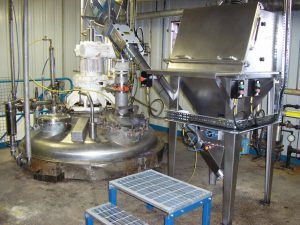
Stainless Steel Reactor used in Chemical Manufacturing

What Is Toll Manufacturing? A Complete Guide for Chemical and Polymer Producers 

Toll manufacturing enables chemical and polymer producers to scale efficiently without the capital burden of expanding in-house facilities. It allows businesses to respond quickly to market opportunities without the cost, risk, and lead times associated with new infrastructure. This flexibility is especially valuable in polymer and specialty chemical markets, where volumes, specifications, and regulatory requirements … Continued

The Role of Polymer Dispersants in Paints and Inks

Acrylic copolymers are fundamental to achieving stable pigment dispersions and controlling viscosity in paints and inks. Their inclusion in formulations prevents pigment agglomeration, improves colour consistency, and contributes to the overall quality of the coating or printed finish. One of the primary benefits of using block or graft copolymer dispersants is their ability to adsorb … Continued

Polymers in Agricultural Suspension Systems

Polymers play a crucial role in maintaining the stability and efficacy of active ingredients. From suspension concentrates to emulsion-based products, copolymers are used to keep solid particles evenly distributed, ensure smooth application, and reduce environmental impact. Solid active ingredients in pesticide and fertiliser formulations often tend to settle or clump over time. As noted in … Continued

Packaging and Adhesives: How Polymers Enhance Adhesion and Coating Uniformity

Polymers, particularly amphiphilic copolymers, are integral to modern adhesive and coating formulations. Their unique structures enable them to stabilise emulsions, enhance compatibility across various systems, and improve overall film quality. Whether aiming for high-performance applications or cost-effective solutions, understanding the role of these polymers is essential for formulators seeking to optimise their products. Stabilising Emulsions … Continued

Food processing

Food-Safe Polymers in Ingredient Dispersion

Maintaining uniform dispersion of ingredients like sugars, starches, flavours, and stabilisers is essential. Though less widely known than their industrial counterparts, food-compatible copolymers serve as critical processing aids, improving flow, consistency, and product quality while adhering to food safety standards. During high-speed mixing or continuous production, dry or semi-soluble ingredients like sugars and starches tend … Continued